Chez Maximka: Molasses cookies for Moonfixer
Saturday, August 23, 2014

Wednesday, July 31, 2013
Tuesday, July 30, 2013
Friday, February 17, 2012
How to Originate Ideas for Writing
 How to Originate Ideas for Writing
By Jacqueline Seewald
I am often asked this question by readers: where do you get the ideas for your novels? I answer this question by saying I don’t just sit at my computer all day and pull ideas out of thin air. The ideas originate from living life as fully as possible. I am interested in the people and places around me. I pay attention. I observe with all of my senses. Reality gets mixed with imagination in my writing.
Writers are people, many of whom live interesting and unusual lives. Some of us tend to find the unusual in the ordinary. It all plays a part in what writers ultimately designate as “fiction.”
I am also a voracious reader as are many other authors. I read a great variety of books, magazines and newspapers. I read both fiction and nonfiction. Reading stirs imagination.
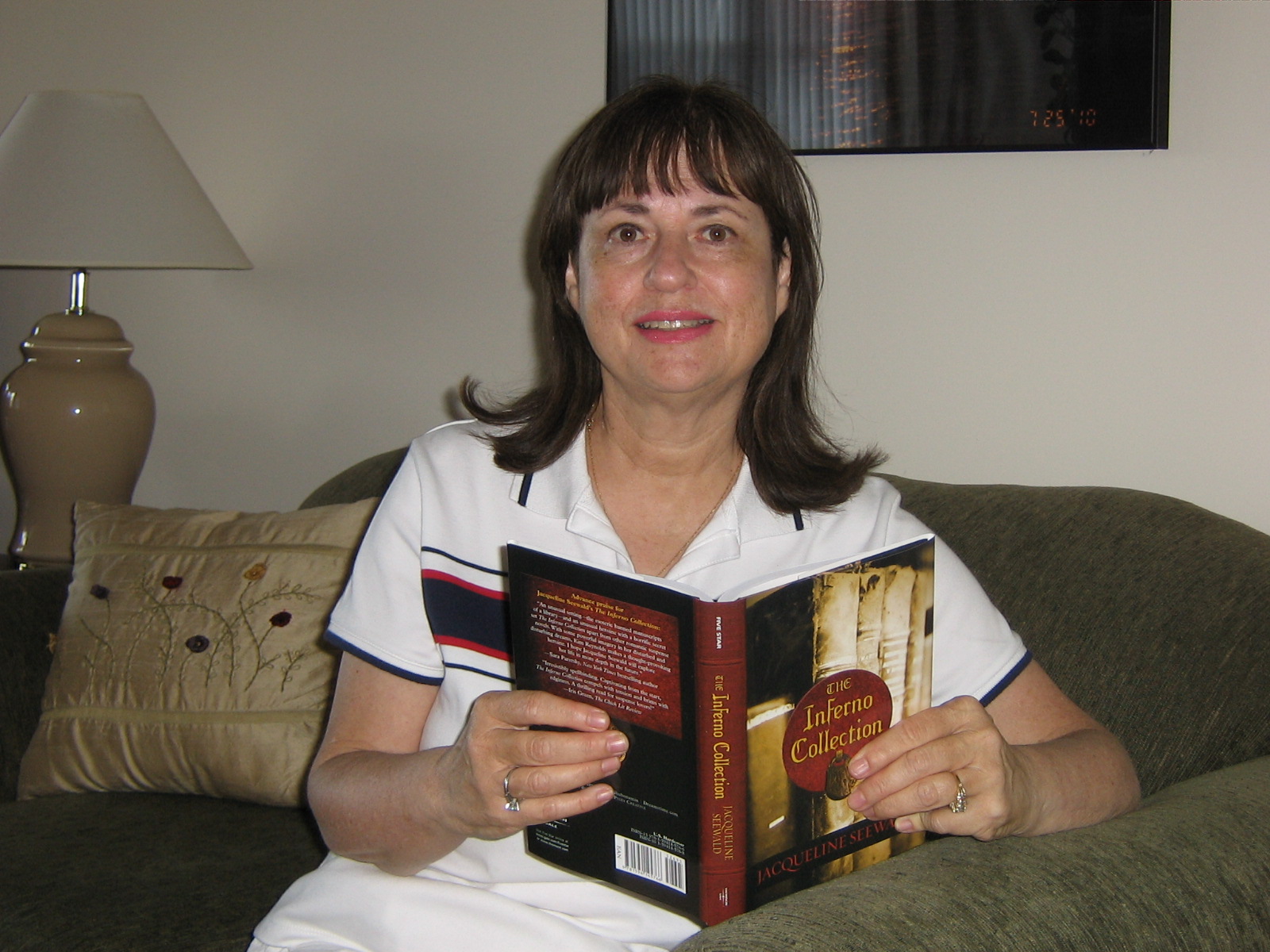
So what typically inspires a novel? What sparks a book series? With the Kim Reynolds librarian sleuth series (THE INFERNO COLLECTION, THE DROWNING POOL, THE TRUTH SLEUTH) the idea started with a lecture given at a symposium for grad students in the library science program at Rutgers University. A Princeton professor/librarian was lecturing on the subject of inferno collections. I was totally fascinated and decided to do some research on the subject on my own. I thought this would be an interesting frame for a mystery novel. THE INFERNO COLLECTION, initially published in hardcover and then large print, was the result. The novel is available in libraries all over the world, also available in all e-book formats: Kindle, Nook, Kobo, Overdrive, etc. http://www.lldreamspell.com/JacquelineSeewald.htm

When a reader/reviewer of the novel asked if inferno collections actually exist, I responded that not only did they exist in the past but still exist in more sophisticated and subtle forms today.
I am not saying that we should anticipate a burning of the vanities as with Savonarola's followers in the past, nor do I believe as in Ray Bradbury's Fahrenheit 451, that the firemen of the future will feel compelled to burn and destroy books.
It is a fact, however, that librarians have viewed themselves as gatekeepers. For example, libraries such as Boston Public at one time found it necessary to maintain separate inferno collections of banned books considered inappropriate for general public display and reading. Often these were books deemed salacious such as James Joyce’s Ulysses.
Did narrow attitudes end with the Victorian era’s sensibilities and prejudices? Apparently not. In the 1950’s, Senator Joseph McCarthy instigated one of the most notorious waves of censorship the nation has ever experienced. Because of McCarthy’s ‘Red Scare’, classics like Henry David Thoreau’s Civil Disobedience, which encouraged men to peacefully protest unjust laws, was pulled from the shelves of the State Department’s overseas libraries. It was one of more than 300 titles McCarthy had banned or burned.
J.D. Salinger's 1951 classic coming-of-age novel, The Catcher in the Rye, has been the object of challenges nationwide for decades because of its language, references to violence and sexual content. According to the American Library Association, the book was the 13th most frequently challenged book in the country's school systems from 1990 to 2000.
In 2005, the Metropolitan Library Commission of Oklahoma City overruled recommendations made by library staff and established a special collection of children’s books with gay themes. The collection would be accessible only to adults. The Oklahoma debate began when a state representative worried that children would have access to books about gay marriage and sponsored a resolution to segregate all library books with gay and/or adult themes.
The list of “condemned,” banned or censored books boggles the mind. It is not only governments and libraries that have chosen to ban books found objectionable for various reasons. Materials are often deemed unacceptable for political or religious reasons or are considered profane, pornographic or sexually too explicit for youth. Publishers and booksellers make these decisions and determinations as well. The advent of e-book self-publishing has tipped the balance in that regard.
It is well to keep in mind that good books often stir controversy. They are designed to question and make people think. That is not something to fear or repress but rather to admire and respect. As Voltaire, author of the banned satire Candide, once stated: “I do not agree with what you have to say, but I'll defend to the death your right to say it.”
Today the internet is a largely unrestricted location to find information, including the subject of banned book collections. As to inferno collections, are they a thing of the past? Knowing human nature, it’s doubtful.
As a reader and/or writer, what trends do you find interesting in publishing? Do you see banned books as a thing of the past? What ideas or information inspire you to write?
What do you enjoy reading? Your thoughts and opinions valued here in this forum for open discussion!
 Note: To celebrate the February 2012 large print edition of THE TRUTH SLEUTH from Kennebec, division of Thorndike Press, as well as the February 2012 paperback edition of THE DROWNING POOL from Harlequin Worldwide Mystery, I am offering a paperback copy of The Drowning Pool to a commenter. Leave an e-mail or web address if interested. Winner will be drawn at random and announced next week here at Author Expressions.
Tuesday, February 14, 2012
Valentine's Day Gift by Jacqueline Seewald

HAPPY VALENTINE’S DAY! I admit to being a romantic at heart. That’s probably why my mystery novels always have a romantic element in them.
Valentine’s Day is also the anniversary of my older son, Andrew Seewald, who is an attorney in New Brunswick, NJ. He and his wife met as grad students at Rutgers University. They were married before a judge on Valentine’s Day in 2003. My husband and I were their witnesses. After a brunch at a local hotel, bride and groom drove a hundred miles so Andrew could defend a client in a courtroom in another town. They finally got a honeymoon several months later. It made no difference; they were and are very happy together.
And now for the announcement:
The winner of a Harlequin edition of THE DROWNING POOL is:
Betty Gordon.
For those who didn’t win this time, please know that THE DROWNING POOL is available in many libraries, and also in all e-book formats as well as the new Harlequin edition.

Also, my mystery novel THE TRUTH SLEUTH is now available in Thorndike large print as part of the Kennebec Superior Collection: http://thorndike.gale.com/upload/currentcatalogs/2012%20Feb%20Catalog.pdf (page 30) Hope you will ask your local library to order a copy!
Have a chocolate heart today and celebrate romance with a good book!
Wednesday, February 8, 2012
Judge a Book by Its Cover?

Judge a Book by Its Cover?
By Jacqueline Seewald
Does cover art draw readers? Any savvy writer will tell you that the first thing a reader notices about a book is the front cover. Maybe you can’t or shouldn’t judge a book by its cover, but it sure helps to have an attractive one that draws the eye of the reader. For new fiction authors, cover art can make or break the book. What kind of front cover grabs the reader’s attention? What kind of cover art should a book display?
Probably the first and most basic question to ask: is the book going to be sold on the shelf of a bookstore or is it going to be available only online? Is the novel going to be a hardcover, trade, paperback or e-book? Yes, it really does make a difference!
Let’s examine e-books. Online the cover is small, so you don’t want anything too fussy or busy. The old saying “less is more” works best for a book cover that sells online. A short title with a large, easily readable font and bright contrasting colors shows up best on the computer screen. You want to avoid covers that are complicated and hard to read. Plain, simple graphics are best. I’m pleased, for example, with the e-book covers L&L Dreamspell provided for three of my books now available in all e-book formats: THE INFERNO COLLECTION, THE DROWNING POOL and STACY’S SONG. http://www.lldreamspell.com/JacquelineSeewald.htm
Here’s t he e-book cover art for the first mystery in the Kim Reynolds librarian sleuth series:
Here’s t
 he e-book cover art for the first mystery in the Kim Reynolds librarian sleuth series:
With hardcover fiction books, the cover also needs to fit the genre, be attractive, while the title still needs to be easy to read. THE TRUTH SLEUTH in hardcover is now available in large print from Thorndike/Kennebec and can be requested at libraries as well as Amazon and B&N online. It’s the third novel in my Kim Reynolds romantic mystery series. The cover art fits the plot of the novel perfectly. Five Star/Gale does respect input from its authors. For my upcoming April release from Five Star, DEATH LEGACY, I didn’t like the initial cover art. I explained my reasoning. Our editor came up with something much more appropriate. The same thing happened with TEA LEAVES AND TAROT CARDS. I explained that the woman in the period costume was dressed in Victorian style. However, the novel is set in the Regency era. I requested an immediate change in the cover art, and it was done.
Mystery or thriller novels are often dark and boding in appearance, appropriate to that genre while romance novels in hardcover often have flowery lettering and show an attractive man or woman. There is often a “money” quote on the front of hardcover books. This can be a blurb provided by another author or a partial review from a publication. It should offer praise for the writer’s work.
Paperback covers need simplicity just as e-book covers do. The artwork should support the title and the genre. Here’s the cover art for the paperback version of The Drowning Pool which Harlequin Worldwide Mystery has published as a reprint for February 2012. Notice no review is offered although many could have been given. Everything is kept very simple but is meant to draw the eye:
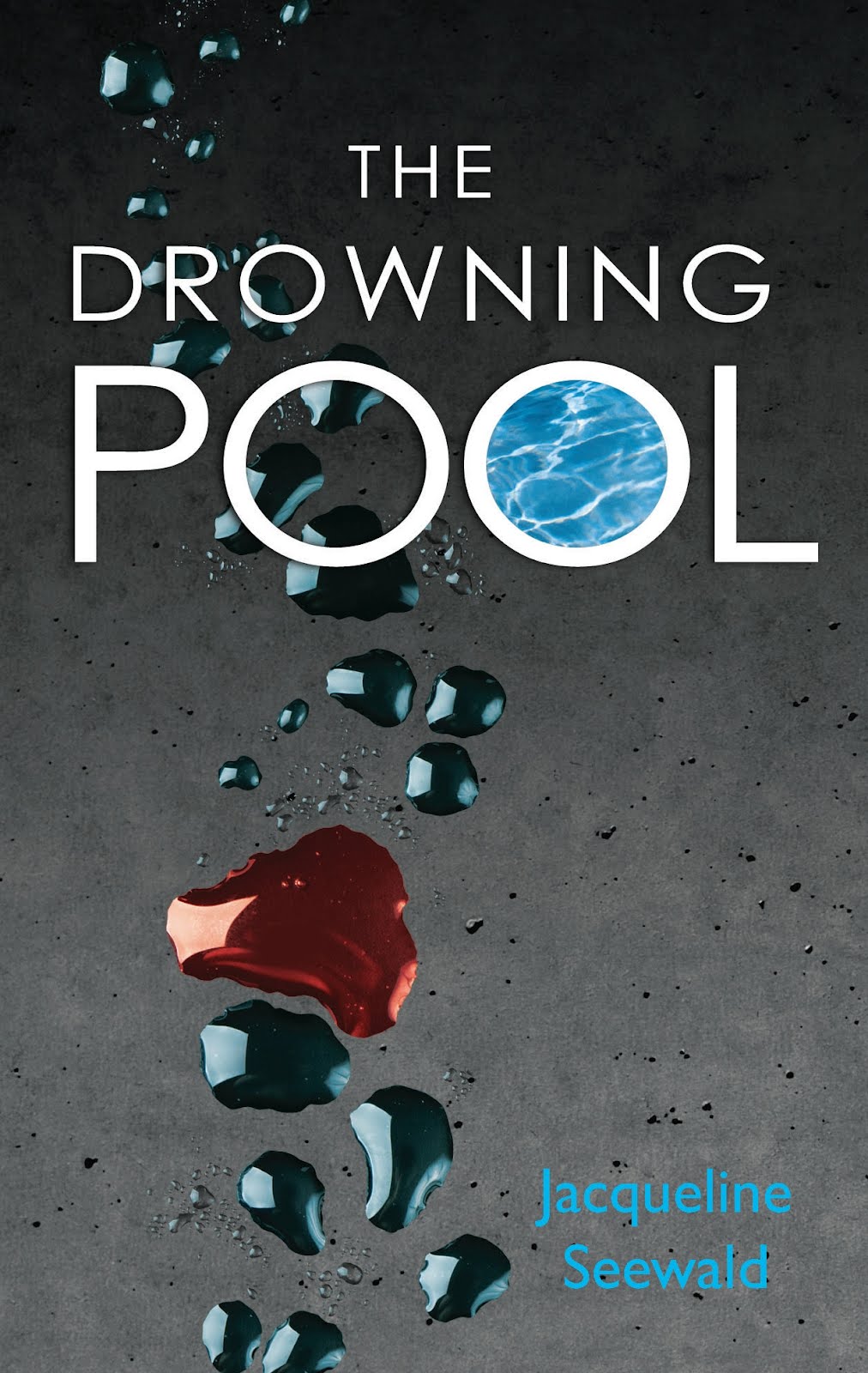
To celebrate the February 2012 large print edition of THE TRUTH SLEUTH from Kennebec, as well as the February 2012 paperback edition of THE DROWNING POOL from Harlequin Worldwide Mystery, I am offering a paperback copy of DROWNING POOL to a commenter. Leave an e-mail or web address if interested. Winner will be drawn at random and announced next week on Valentine’s Day.
Tuesday, December 6, 2011
Holiday Shopping: What Next?

Holiday Shopping: What Next?
by Jacqueline Seewald
Nothing can quite compare with the yearly ritual of holiday shopping, which theoretically begins on the day after Thanksgiving, Black Friday. However, in actuality it begins much earlier, of late right after Halloween. In fact, the way things are going, pretty soon the stores will start putting up tinsel on the 4th of July.
The frenetic pace of shopping madness increases unabated throughout December. The shopping itself takes on such dimensions that with many people, the material supercedes the spiritual aspect of the holidays.
But before the shopping can even begin, there is the business of finding parking at the Mall. Holiday shoppers know when they are nearing the Mall because traffic becomes as thick as an ant colony, and jockeying for position starts in earnest. Inevitably, a type "A" personality loses patience and aggressively pulls out on the shoulder of the road, speeds ahead, then forces his/her way into the regular stream of traffic. This individual manages to gain perhaps four or five car lengths to ultimately beat the traffic light, forcing other drivers to slam on their brakes and come to an abrupt halt. A cacophony of horns proceeds to announce the general agitation.
Arriving at the mall, one is treated to a breathtaking sight—an unending sea of automobiles. There is quite literally not a parking spot to spare. And so begins the art of cruising for a space. This can be compared to the choreography of a ballet. Automobiles pirouette and arabesque around the lot.
Inevitably, there is a car waiting in each aisle for someone to pull out. Often there are two vehicles set to swoop down like vultures. The poor driver who must pull out of the spot has a serious dilemma: which way to go? One or the other of the waiting drivers must be disappointed, only to drive off angrily, perhaps offering the middle finger salute. Definitely not showing proper holiday spirit! (More like the gunfight at Okay Corral) Drivers keep cruising, ready to dive like kamikaze pilots when they find a likely target--barely avoiding fender benders--a holiday miracle in itself. No matter how many spaces exist, there are never enough.
Another technique involves following those who are leaving. Sometimes these shoppers are merely putting away their packages and return to the Mall for further exploration. Then there is the individual, fully aware someone is waiting for his/her parking spot, who decides this is a good time to sit and light up a cigarette, fiddle with the car radio, or begin a philosophical discussion on the meaning of life with someone they've conjured on a cell phone.
Most amazing of all are those who decide to grab the closest parking spot. I'm talking here about nabbing the spaces set aside for the handicapped. These artists fall into several categories. First are those who have no physical impediment whatsoever but park illegally because they don't want to continue cruising. We have no trouble spotting them as they run out when the police start ticketing. The second category: those who somehow obtained handicapped stickers yet can move like gazelles, either had some impediment but are over it and kept their stickers, or obtained them illegally in the first place. There seem to be a growing number of these talented artists who we may refer to as prima donnas.
With so many people claiming the right to place handicapped stickers in their automobiles, I am waiting for the time when non-handicapped signs will be issued instead. After managing to obtain a parking spot and reaching the Promised Land of the Mall, we are greeted by a chorus of Hallelujah from the sound system. Unfortunately, by this time, we are almost too weary to shop.
When Christmas and Chanukah come and all the gifts are finally handed out, matters are not in the least resolved, as a good portion of those gifts will end up being returned soon after. (The heaviest shopping day of the entire year is December 26th) So just when we think our holiday shopping is finally done, it's only just begun!
Then there's the matter of re-gifting. That's the most bizarre ritual of all. This refers to presents that don't come with any clue as to where they were purchased. Even Sherlock Holmes would scratch his head in perplexity. These are gifts that no one in their right mind would want to keep: purple plaid socks, perfume that would make a skunk turn up its tail in disgust. Well, you get the picture! So what does one do with such odious presents? Naturally, we save them and give them to those who have given us their re-gifts. You know you've gone full cycle when one of your re-gifts is gifted back to you.
I would like to suggest that e-books are an excellent gift to give. You don’t have to run around. You can make your selections in comfort. And you don’t have to spend your life savings. There’s a perfect book for everyone, whether a cookbook like KILLER RECIPES or romantic mystery thrillers like THE INFERNO COLLECTION and THE DROWNING POOL, my two novels just published in e-book formats by L&L Dreamspell. Check it out at:
http://www.lldreamspell.com/JacquelineSeewald.htm
What are your feelings regarding holiday shopping? Do you give books as gifts? Thoughts and comments welcome!
Thursday, May 12, 2011
what's happening
My publisher got the new book Trashy Gourmet a week ago. It is another Adam Thomas mystery. Also been busy with talks and conferences in Texas. Have a number of things coming up and will write abut them shortly.
Friday, March 25, 2011
Amanda Hocking: What Does Her Success Mean?

Amanda Hocking: What Does Her Success Mean for Publishing?
by Jacqueline Seewald
The New York Times has broken the story that Amanda Hocking, a self-published paranormal YA author age 26, has signed a major deal with St. Martin’s Press. Hocking who self-published her e-books and sold them for 99 cents, has become a bestselling author. Bidding for her new work rose beyond $2 for worldwide English rights in a four book deal.
Some people have used this information to declare this as proof that e-publishing will destroy traditional publishing. However, Amanda Hocking herself disagrees with this analysis. In an intelligently written essay on her own blog,
(http://amandahocking.blogspot.com/2011/03/some-things-that-need-to-be-said.html)
Hocking says it’s harder to become a bestselling writer through
self-publishing than with traditional publishers. That is something I would agree
with. If the writing and presentation are amateurish, readers will simply not
buy the book no matter how little it may cost.
My YA novel STACY’S SONG certainly hasn’t been selling like Hocking’s books
as either a print or e-book despite good reviews; however, I still don’t believe that self-publishing is the answer for most writers. Hocking points out in her essay that she needed to get the help of editors and other professionals in publishing her work.
She couldn’t do it all by herself if she was going to create a good product. And now
Hocking has signed with a traditional publisher.
What is your interpretation of Amanda Hocking’s success? What do you see as the
future for e-publishing? For self-publishing?
Monday, February 28, 2011
Oscars Over: Let’s Talk Books!

Book Review: Romance of My Dreams Volume 2
by Jacqueline Seewald
ROMANCE OF MY DREAMS, Volume 2, is an L&L Dreamspell Anthology which contains ten romantic stories by eight different authors. The enjoyment lies in that you get ten different stories with a variety of voices and characters.
The lead off story is Pauline Baird Jones’ “Comfort Zone.” Halle Greenfield isn’t thinking of marriage. However, Lord Keil has other ideas. The story grabs the reader from the beginning: “Marrying a man she’d met once was a bad idea. When that man was
ET it was insane.” Yes, this is a science fiction romance. It is also charming, romantic, humorous and will leave you with a smile on your face.
In Cindy Davis’ “Cuppa Jarvis” the intriguing character Detective Colby Jarvis is called in to solve the break-in at Angie Deacon’s community theatre. Needless to say, a romance develops. The story could well be developed into a romantic suspense novel.
“Pyrotechnics” by Joyce Scarbrough is more than a college romance. Jaycee Stevens is a college freshman trying to find herself. Like Jaycee, Bud Stanton is an athlete. He is also
troubled about finding his identity. Both have family problems. The two are a volatile mix. And they do combust. The dialogue is realistic and the characters well-drawn.
“Recov” by Helen Henderson is a bitter-sweet romance, touching and tender. It is the science fiction story of Eric Marten who has been chosen by the government to create
a child with the woman of his dreams, Lauren Woods. There’s just one problem:
Lauren died before her time and has been brought back to life for a brief time to create
a perfect child with Eric. At first chilling, the story becomes a warm and sensitive romance as the relationship develops between Eric and Lauren.
In “The View from the Balcony”, D.K. Christi, begins her story with a woman who is ill and has just been jilted by her fiancé racing across a small Italian beach on horseback. The image of the blond-haired beauty in a white wedding dress dashing through the pounding surf on a white stallion catches the attention of a man who has also suffered losses. He rescues her from drowning and a beautiful love affair ensues. This is a lovely, romantic story that captures the reader’s attention and keeps it to the end.
“The Right Feeling” by Phyllis Humphrey is the story of Megan Taylor, an interior decorator, who has inherited an old hotel in Hawaii from an uncle. She cannot afford to
maintain the hotel or fix it up properly and has decided to try to sell it to a large corporation. The moment she sees Bart Graham who represents Condon Properties, she finds herself attracted to him, and the feeling is returned. But all is not smooth going for Megan because her hotel is hit by a tsunami. This is a well-written, enjoyable romantic story. Readers will care about Megan and Bart.
In “Son of a Sheik” by Pauline Baird Jones, a ten year old child with a giant IQ acts as matchmaker. Elle parents her dead twin sister’s child, Emma. Enter Rafiq who dumped Elle five years before and broke her heart. Em sets matters right. A very pleasing story with endearing characters.
“Manless and Loving It” by Lisa Rene Smith is a tour de force. Recently divorced Samantha Greene is walking on a deserted beach in the evening feeling her fifty years when a man comes out of nowhere and frightens her. However, Detective Nick Karras is not trying to attack Sam as she at first assumes but is actually interested in protecting her. A pithy, exciting romantic story.
“Safe Harbor” is the second story in this collection by Joyce Sterling Scarbrough.
Cal Pardue is suspicious of Jasmine Gregory’s attention to his grandfather in the nursing home. Jasmine is kind to everyone but Amos in particular because he reminds Jasmine of
her own grandfather who she hardly got to know. Jasmine’s surprising background makes her an especially interesting character, but she must overcome Cal’s hardcore distrust of women. The Louisiana locale provides an authentic setting for a sensitive yet entertaining romantic story.
“Casino Life” is my own contribution to the anthology. It’s as much a literary short story as a romance. Sara is a lonely widow whose life has lost its meaning. Her regular bus trips to Atlantic City are what keep her going. But Sara is not a gambler. Rob, a construction worker, was recently laid off his job. They meet on the bus and a bond forms between them, two lost souls in need of comfort and companionship. For them, the excitement of casino life ignites romance and hope.
Sunday, January 9, 2011
Blog Talk Radio Program Reformated
There is a new place where you are welcome to promote your work—as long as your fiction/non-fiction includes a main character (or supporting cast) who is a strong woman, (hopefully of the good example type! but will consider the other if there is a lesson to learn in that of the other type! LOL)
Starting February 1, I am resuming my weekly Blog Talk Radio internet live talk show. I’m changed the format from Murder She Writes, to Writing Strong Women. The 30 minute program will air on Mondays at 1:00 p.m. CENTRAL time and is conducted over the telephone. There is no charge for this.
Please pass the word along to others, and if you are interested in booking an interview, email me at this email address. I usually go on a first come first serve basis.
I will be interviewing folks who write any genre, any time period, again, fiction and non-fiction— published--and whose work supports the topic of strong women.
If interested, let me know.
Thursday, December 2, 2010
Horror Fiction
Horror Fiction: What’s It Really About?
by Jacqueline Seewald
L&L Dreamspell publishes many genre anthologies which include horror thrillers.
One of my best short stories “Wormwood” was included in L&L’s Thriller anthology published in 2009. Another, “Morgan’s Mountain,” now appears in the new L&L Dreamspell anthology Nightmares in which twenty unique stories are featured:
http://www.lldreamspell.com/DreamspellNightmares.htm
When people talk about horror fiction, they might let out an involuntary shudder.
However, horror fiction isn’t just about the gruesome. It’s not just about the supernatural, ghosts, goblins, ghouls, gremlins, etc. No, it’s really about what we fear, what we dread most. These things may be ordinary, like a pit bull off the leash running toward us, or extraordinary, like meeting a vampire in a neighborhood bar at midnight. We have fears that are both usual and the unusual.
Horror fiction will not be going away any time soon because it is human nature to feel fear as an emotion. Horror fiction helps us handle these feelings, helps us cope with and confront our terrors, those within us and those in the environment around us.
Comments welcome!
Monday, November 15, 2010
What Are Teens Reading Today?

Blog What Are Teens Reading Today?
by Jacqueline Seewald
As an English teacher, an educational media specialist/school librarian, and as a parent
(besides being a writer), this is a question that has always interested me: What are teens reading?
To be as current as possible I did some googling on the net and discovered some helpful
websites such as: http://www.teenreads.com/, http://teenfictioncafe.blogspot.com/
and http://www.ala.org/. There are of course many others.
The good news is teens ARE reading! They have to read the classics for school. But many are reading for pleasure as well. (Of course, they might not always be reading what their parents think they should be reading.)
Will the trend toward horror fiction continue? Probably. Teens have enjoyed horror fiction for many years now. It didn’t just begin with Stephen King’s Carrie.
There’s a wide interest in a variety of speculative fiction--science fiction which many boys enjoy, as well as fantasy fiction. J.K. Rowling’s Harry Potter novels are widely read across the spectrum of teens, children and adults. Maybe speculative fiction has wide appeal because young readers want to escape from the real world into another simpler realm where good triumphs over evil in the end.
As for romance fiction, girls are still reading in that genre. Paranormal dark romance for teens is particularly hot. Readers are enthralled with Stephenie Meyer, but there are many other writers emulating her success. Publishers are eager to seize and ride on the coattails of whatever is trendy.
My latest book for teens, STACY’S SONG, is a coming of age novel/romance published by L&L Dreamspell. I didn’t try to be trendy, just tried to write something that teenagers could enjoy and connect with. It is now published both in paperback and electronic media.
http://www.amazon.com/Stacys-Song-ebook/dp/B0049P1N44/ref=sr_1_2?ie=UTF8&qid=1289823047&sr=8-2
Here is what reviewers have said so far:
—"This is a wonderful young adult novel! Full of honest emotion, problems, conflict and a cast of fascinating characters, STACY'S SONG is a heartwarming story of a girl growing up and learning how to make thoughtful decisions that will affect her life today and in the future." —Alice Duncan, award-winning author
—"Young readers will embrace Stacy. Not only must she deal with her father, who does not like the changes in her life, especially Michael and the band, but the peer pressure from her friends. STACY'S SONG is a well written story about those awkward teen years, when the ugly duckling turns into a swan, and the rocky roads that teenagers traverse. This is an enjoyable, fun read, and I recommend it for young adults." —Deborah C Jackson – Romance Reviews Today
—"This is an entertaining young adult tale starring a likable high school age girl who goes from being the outside freak to the in-crowd. Stacy is stupendous lead as she struggles with two boys; one is charming while the other is demanding. Who will she choose particularly since her dad has already selected who he wants kicked to the curb." —Harriet Klausner—Genre Go Round
Will teens want to read this novel? I certainly hope so!
What do you see teens reading? Who do you think they should be reading?
Thursday, November 11, 2010
A Special Thanksgiving Event!
The Holidays are a wonderful time of year, where we thank those in our lives that have done so much for us throughout the year. Romance in the Backseat is also taking part in saying thanks. We have authors giving away books as well as some truly generous giveaways. Those of food for families in need this Holiday. Come and Visit Romance in the Backseat. Nominate those who need some cheer for the book giveaways and those you know who are in need to win the Food Gift Cards from Silver Publishing and author Kylie Brandt.
Romance in the Backseat
Join us and enter to Win a $100 Food Gift Card from Silver Publishing

Author Kylie Brandt is doing a special $50 Holiday Food Giveaway on RITBS

Romance in the Backseat
Saturday, November 6, 2010
NEW NOVEL-QUEST FOR THE CRYSTAL SKULL is now out
The new Virginia Davies mystery novel Quest for the Crystal Skull is now out and available at bookstores everywhere. If you can't find it have them order it!
Quest for the Crystal Skull
A Virginia Davies Mystery
by
David Ciambrone
Texas. It’s the biggest state in the continental United States. Sun worshipers, college students at Spring Break, smugglers and hurricanes visit its coastline. This hurricane found Virginia Davies at a beachfront resort on St. John’s Island securing archaeological artifacts and treasures worth millions that had been hijacked. With the hurricane raging around her, she and a long time friend, Donna Boletti, encounter Virginia’s murdered partner, and some killers trying to steal an old crystal skull.
After she and Donna eliminate the threat of the killers and the hurricane ebbs, they heads for New Orleans to trace down the people behind the murders. Virginia and Donna are pulled into the world of Voodoo and find other groups wanting the crystal skull and her dead. She and Donna keep searching for clues while the body count keeps going up around them. She learns the people behind the murders are headquartered in Rome. In Rome she manages to get inside the world of a dangerous art and fake antiques business and an unusual laboratory for the manufacture of undetectable fake art and antiques that could mean her death.
Virginia entangles the reader in a rapid-fire adventure involving the worlds of murder, voodoo, and antique fraud and the sights and sounds of Texas, New Orleans and Rome up to the high stakes end on the Mediterranean Sea.
Tuesday, September 21, 2010
Cats in a Dreamspell: The Cat’s Meow
Cats in a Dreamspell: The Cat’s Meow
By Jacqueline Seewald
The first thing I noticed about CATS IN A DREAMSPELL is the exceptional artwork. I’m not talking just about the clever cover art both front and back but also the fact that each of the twelve short stories in this anthology has its own unique cat photos. This is appropriate because each story is different and makes its own individual impact.
The first story in this anthology is by Mark Rosendorf, who has written several well-reviewed novels in The Rasner Effect Trilogy. “Cat in the Cockpit” is clever magic realism. The story has shadings of Twilight Zone but still manages to be fresh and original—okay maybe kind of weird. Mike and Joe want to be pilots and are in the cockpit of a 747 plane with the pilot and co-pilot, who one after the other leave and don’t return. There is also a cat in the cockpit. Mike is unsettled by this and goes in search of the pilots. Everyone else appears mesmerized by a movie, including the flight attendant who soon also disappears. Joe sees no problem in flying the plane, after all, he’s got a copy of the manual. Theatre of the absurd? Perhaps. Yet it works because the reader is inclined to suspend disbelief, completely sucked into the story and wondering what will happen next.
“Dog Matters” by D. Nathan Hilliard is another unique and original story. Minke the cat tells this story in first person point of view in a lively manner with a distinct personality and voice. He has lived in harmony with Chipper the dog since they were kitten and pup. But something evil has flown into the birdhouse. Chipper warns Minke and then tries to protect his human family from harm but he fails tragically. After that, although Minke is warned that this is a matter for dogs, not cats, he decides to fight the monster. A story worth reading.
“Chronicles of a Cat Woman” by Cathy Noonan is a psychological horror story. It begins with Bethany Stevens, a young reporter assigned to interview Muriel Whethorford, “the cat lady.” As they talk, Bethany discovers a disturbing coincidence. Both she and Muriel suffered great tragedies in their lives. Bethany had repressed hers. The story becomes eerie and frightening with a shocker of an ending.
“A Cat Named Ginger” by Laurel Lamperd is the story of Gordon Smith whose wife had died. Gordon missed her cooking most especially and was delighted when he met Gladys Dobson who loved to cook and bake. Her Rose Cottage seemed like paradise. But Ginger, Gladys’s cat, had other ideas. Thus begins an interesting tale with subtle humor, dark insights into human nature, and interesting twists.
“Investigator Incarnate” by Christy Tillery French is a mystery told from the cat’s point of view. However, this is no ordinary cat but a police detective who has been reincarnated as a cat. He returns to his old police station and decides to help two rookies solve two murders while encouraging a romance between them as well. This story keeps the reader engrossed from beginning to end. It has wit and charm.
“Mystery, Mischief and Mayhem” by Teresa Leigh Judd is the story of Janet Spaulding, a computer software analyst who has two cats, Mischief and Mayhem. Mischief drags in a soiled garden glove. Next, the cats uncover a human hand in the pile of dirt behind Janet’s house. The mystery of the body buried in her backyard gives Janet a chance to meet a very attractive police detective. This is a well-written, engrossing and enjoyable story.
The next story is one that I have written, “Just the Three of Us.” I won’t comment since that might be self-serving.
“The Purrsistant Cat” by Teresa Leigh Judd (yes, you saw her name before) wrote a story about Shannon whose cat Smoky has a sixth sense and knows the house Shannon has rented is dangerous. This is a horror story, a tour de force, and I doubt you will guess the ending.
“Mal’s Bounty” by Neal Levin and Darren W. Pearce is something of a fantasy, mystery, horror story combined. It’s unique, different. Carravale is a city in which a thief named Weaver Finch steals at night. She is aided by a telepathic cat named Mal. Weaver intends to rob Old Man Crowshaw’s Manor. Entering it, she discovers much more than she ever bargained for.
“Amelia and the Better Path” by Tony Williams is a quaint mystery story set in England. Amelia’s cat Ivan is missing. Stephen, her grandnephew, offers to help the wizened spinster in her search. Amelia knows her village and is soon able to find Ivan and fix some other problems as well.
“Chester’s Treasure” by Linda Houle is the story of how Chester the cat locates an amazing treasure in a house with a history. Chester’s owner is Valerie who has married a vampire named Andrew. It is Andrew’s house that Chester explores. An enjoyable story well worth reading.
“Smokey and Bandit” by Randy Rawls is a clever cat story. The tale is told by Smokey, a cat, one of two who allow Josh, a South Florida PI, to share their home. They even help him in his work and protect him from harm. A very entertaining mystery story.
Friday, May 28, 2010
Research into Norse Mythology
Finding sources for research into historical topics takes more than just reading novels set in that era. For my next novel, a historical fantasy set in Norway in the 1400s, I'm not only involved in the clothing worn in that era, but also in the weather patterns, geography and topography, historical events and the old Norse religion. On my personal blog http://dianadriver.blogspot.com/ I write about one of my favorite books on runes.
Come on over and see the picture of Lokken and then check out the runic symbols and the book on Northern Magick by Freya Aswynn.
Diana
Come on over and see the picture of Lokken and then check out the runic symbols and the book on Northern Magick by Freya Aswynn.
Diana
Tuesday, May 25, 2010
Radine Nehring
Radine Nehring visits my blog today and talks about how she makes her plot fit her place. Come over and read how she does it!
wwww.sylviadickeysmithbooks.wordpress.com
Syl
wwww.sylviadickeysmithbooks.wordpress.com
Syl
Friday, April 30, 2010
weigh in on Arizona illegal immigration law
The Federal government is the one who SHOULD be enforcing our immigration laws. BUT they are not doing it. The illegal (CRIMINALS) immigrants, while doing work here are not paying income tax, are a burden on our hospitals and schools and guess who gets to pay for it? YOU DO! Then there is crime. A large number of the CRIMINALS in our jails in the boarder states are illegal immigrants. This mess is costing the immigrants who are here legally (welcome) and the citizens of this country a lot of money. It comes in the form of higher hospital bills, higher insurance (auto and medical), welfare, etc al. See the following:
IF YOU CROSS THE U.S. BORDER ILLEGALLY (you are a (CRIMINAL), YOU CAN GET:
1 - A JOB,
2 - A DRIVERS LICENSE,
3 - SOCIAL SECURITY CARD,
4 - WELFARE,
5 - FOOD STAMPS,
6 - CREDIT CARDS,
7 - SUBSIDIZED RENT OR A LOAN TO BUY A HOUSE,
8 - FREE EDUCATION,
9 - FREE HEALTH CARE,
10 - A LOBBYIST IN WASHINGTON
11 - BILLIONS OF DOLLARS WORTH OF PUBLIC DOCUMENTS PRINTED IN YOUR
LANGUAGE
12 - AND THE RIGHT TO CARRY YOUR COUNTRY'S FLAG WHILE YOU PROTEST THAT YOU DON'T GET ENOUGH RESPECT
I JUST WANTED TO MAKE SURE I HAD A FIRM GRASP ON THE SITUATION.
This is a slap in the face of all the immigrants who come here legally and to Americans. Mexico is against this law and why? Because the illegals send back to Mexico billions of dollars.
Do we need to stop this? YES. Do we need tighter control of our boarder with Mexico-YES and I think we should use the army and Marines to help do it. Should we give amnesty to the illegals here? NO. They are criminals and should be caught and punished. If we grant amnesty that will send a message to others to come over and ignore our laws. It happened the last time we did it and it will happen again.
NOW, how about Arizona? I think what they did is within the law. The feds haven't done a good enough job and the citizens of AZ are upset and have taken matters into their own hands. Good for them. I'm also tired of the hispanic community trying to play the race card when something they don't like happens. Arizona should question suspected people and ask for ID. If you are here illegally, you are a criminal and should be arrested. Arizona can enforce the immigration laws in parallel with the FEDS and more of the boarder states, including Texas and California should do it too. IAM IN FULL SUPPORT OF THE NEW ARIZONA LAW. OTHER STATES SHOULD DO IT QUICKLY. MAYBE SOMEBODY IN WASHINGTON WILL GET THE MESSAGE.
Thursday, April 22, 2010
THE POD STIGMA
There have been times in the past when I’ve been in conversation with an author published by a large, traditional (read New York) publisher – some being well-known, others not — and when I would mention my books are POD, their expression made me wonder if they were about to cross their fingers in front of their face and fling holy water on me while backing away. Their subsequent comments conveyed bias against POD and I’m not sure if this is as a result of naïvete or lack of knowledge.
Due to misconceptions and misstatements, POD has become a tainted term, so let’s set the record straight about what it really means. I’ll use my own book as an example, published by an independent publisher. Bear in mind, not all small and independent publishers will have in place the same policies as my own and I would caution authors to research extensively before signing with a publisher.
Print on Demand, or POD, is a publishing technology which simply means my paperback book is printed as it is ordered utilizing digital equipment.
POD does not mean my book is self- or subsidy published, although it is utilized in these venues. Small and independent publishers, as well as those who offer subsidy publishing and authors who choose to self publish, rely on this technology.
POD does not mean my books are of a poorer quality or are not professionally edited. Many small and independent publishers produce professional, viable books on par with those offered by the big-six NY traditional publishing houses.
POD books are pragmatic and cost feasible. No warehousing is required, thus, no overhead for rental space or warehouse employees, and no trucking or logistics costs.
POD is environmentally friendly: According to Linda Houle, publisher and author of The Naked Truth about Publishing (http://tinyurl.com/2dzb6jr) estimates show that approximately thirty million trees, or ten billion dollars, are wasted on print-run books subsequently remaindered (returned as unsold).
POD books, like print-run books published by large, traditional publishers, are returnable.
POD books are distributed by the two largest book wholesale distributors: Ingram and Baker and Taylor.
POD publishers, like large traditional publishers, send out ARCs (Advanced Review Copies) to professional reviewers and promote the book upfront. As with all publishers, even the big-six as pertains to their authors who don’t receive the mega-bucks promotional team, the vast majority of promoting lies with the author.
POD publishers offer the same standard discount to bookstores as do the larger traditional publishing houses.
POD publishers continually expand their lines as opposed to the large traditional publishers who replace titles. In other words, books aren’t pulled from shelves or discontinued, offering authors time to build readers.
POD publishers usually offer both print books and Ebooks (electronic books).
POD books are larger than paperbacks and smaller than hardbacks. They are generally 5.5”x8.5” or 6”x9”, and are called soft-cover trade paperbacks. Many readers find this size preferable.
POD books are virtually available forever. Unlike print-run books, with a limited shelf life, a POD book allows the author time to build a readership base.
POD books are now available instantly. The Espresso Book Machine is currently in use in selected bookstores across America. Readers can choose the book they wish to purchase and within minutes it is printed and bound and ready to take home.
POD is now being used by large, traditional publishers. Although, on the surface, they seem to shun POD technology, they have begun utilizing it for select books.
The onset of POD and Ebooks has brought about a major flux in the publishing industry. Although the large, traditional publishers have been slow to acknowledge and utilize these changes, they are beginning to come on board. In a perfect world, all modalities of publishing would be considered on equal terms. We haven’t gotten there yet, but I believe it’s not too far in the future. Authors now have the option of choosing how their book is published, and it is hoped they will be treated with respect and not be subject to derision or an elitist attitude concerning their choice if it falls outside of what was once considered the publishing standard.
Subscribe to:
Posts (Atom)

 Posts

